


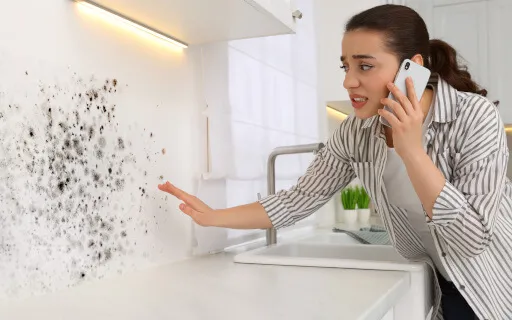
Many rental mold problems begin as ordinary maintenance issues: a leaking pipe, damp ceiling, failed seal, or ventilation problem. Some are addressed quickly and never become disputes. Others return after repairs, continue despite repeated reports, or lead to damaged belongings and disagreements about responsibility. Tenants researching toxic mold attorneys california may reach a point where another maintenance request no longer feels sufficient. Before escalating, it helps to organize the facts, separate the issues involved, and identify what remains unresolved.
Was the Moisture Source Actually Fixed?
Visible mold often indicates that moisture is present somewhere in the building. Cleaning the surface may improve appearance, but if the underlying leak, condensation, plumbing problem, or water intrusion remains, the condition can return.
Tenants should note where moisture appeared, when it was first noticed, and whether the same area became damp again after repairs. Photographs taken at different stages can help show the sequence. California public-health guidance also emphasizes correcting the source of dampness rather than treating visible mold alone.
Review the Notice History
Before assuming that a landlord ignored a problem, gather the communications showing what was reported and when. Save emails, maintenance requests, text messages, photographs, and written responses.
If the first report was made by phone, a later written message summarizing the concern can create a clearer record. Keep the wording factual: describe the location, visible condition, leak, odor, or recurrence rather than making conclusions that have not been established.
Separate Repairs From Property Loss
A maintenance issue can become more complicated when furniture, clothing, books, electronics, or other belongings are affected. Keep property-damage records separate from communications about the building itself.
Photograph affected items before disposal when it is safe and practical. Save receipts, order confirmations, cleaning invoices, or replacement estimates where available. Avoid exaggerating values or treating every affected item as a total loss without support.
Know What Local Code Enforcement May Do
California housing rules allow qualifying dampness and visible mold to be treated as substandard housing conditions when the condition reaches the level described in state law. Local code-enforcement agencies, rather than the California Department of Public Health itself, generally handle inspections and enforcement.
That process is different from a private legal claim. A code inspection may focus on whether housing conditions need correction, while questions about damages, lease obligations, or other remedies can involve separate issues.
Understand When Legal Review May Be Useful
A tenant may consider speaking with mold attorneys los angeles when the same condition repeatedly returns, repair requests appear unresolved, significant property damage has occurred, or the dispute has become difficult to evaluate without legal guidance.
That does not mean the presence of mold automatically creates a successful claim. Important facts may include the source of moisture, notice to the property owner, repair history, lease terms, inspection findings, documented losses, and how the parties responded.
A legal consultation is more useful when the tenant can provide an organized record rather than relying only on memory.
Keep Health Questions Separate
Damp or moldy environments may be associated with respiratory or allergic effects for some people, but symptoms can have many possible causes. Anyone experiencing health concerns should seek appropriate medical evaluation rather than attempting to diagnose the cause through photographs, internet searches, or a legal consultation.
Medical records should be kept separately from maintenance records and property-damage documentation. Timing alone does not establish that a particular condition caused a particular symptom.
Do Not Delay Necessary Repairs to Preserve Evidence
Tenants may worry that remediation will remove evidence. However, necessary repairs should not be obstructed simply to keep the condition unchanged.
Where it is safe and reasonable, photographs, videos, written notices, inspection reports, and damaged-property records can document the condition before work begins. If access is requested for repairs, tenants should consider their lease obligations and seek legal advice if a dispute about access arises.
Prepare Before Seeking Advice
Before contacting a lawyer, organize a short chronology, the lease, photographs, maintenance communications, inspection reports if available, and records of related expenses. This makes the initial discussion more efficient and helps separate confirmed facts from assumptions.
Conclusion
A rental mold problem may become more than a routine maintenance request when the moisture source remains unresolved, the condition repeatedly returns, or the dispute expands to property damage, expenses, or other significant concerns.
The strongest preparation is factual. Preserve notice records, document repairs and recurrence, keep different categories of evidence organized, and understand that code enforcement, medical evaluation, and legal advice serve different purposes. No single fact guarantees a legal outcome, but a clear record can make it easier to understand what happened and what options may be available under California law.